
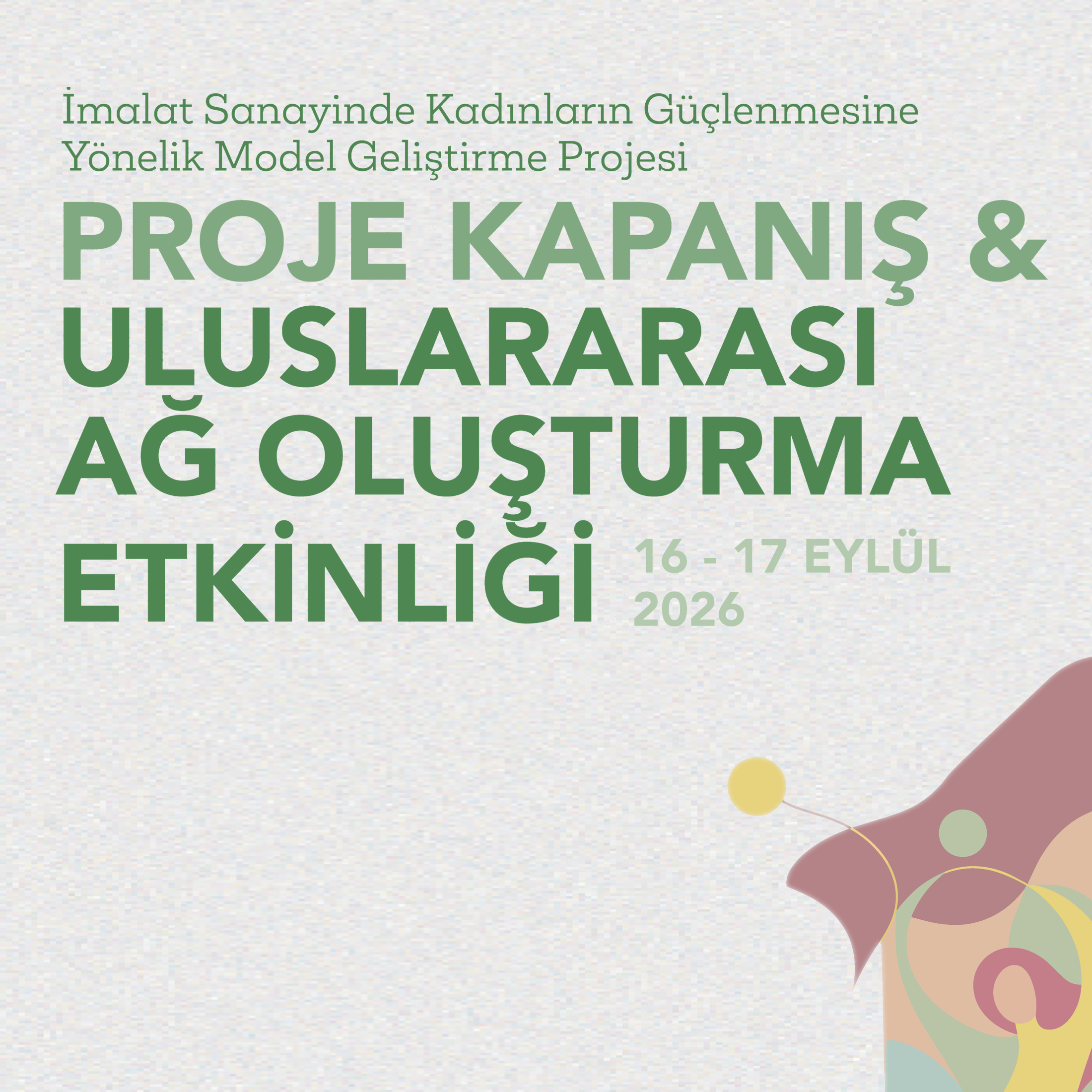
Etkinliği ve Uluslararası Ağ Oluşturma Etkinliği İçin Geri Sayım Başladı!
Türkiye İşveren Sendikaları Konfederasyonu (TİSK) , Birleşmiş Milletler Kalkınma Programı (UNDP) Türkiye iş birliğiyle, T.C. Sanayi ve Teknoloji Bakanlığı desteğiyle ve Avrupa Birliği finansmanıyla yürütülen "İmalat Sanayinde Kadınların Güçlenmesine Yönelik Model Geliştirme Projesi", 16–17 Eylül 2026 tarihlerinde Conrad İstanbul Bosphorus'ta gerçekleştirilecek Proje Kapanış Etkinliği ve Uluslararası Ağ Oluşturma Etkinliği ile önemli bir kilometre taşına ulaşıyor.
İki gün sürecek etkinlik; kamu kurumları, Avrupa Birliği temsilcileri, Birleşmiş Milletler kuruluşları, uluslararası kuruluşlar, özel sektör, akademi ve sivil toplumdan üst düzey temsilcileri bir araya getirerek kapsayıcı sanayi dönüşümü, kadınların STEM alanlarında güçlenmesi ve ikiz dönüşümün geleceğine ilişkin güncel yaklaşımların ele alınacağı önemli bir buluşma noktası olacak.
Etkinlik aynı zamanda, ülkeler ve kurumlar arasında yeni iş birliklerinin geliştirilmesi ve bilgi paylaşımının güçlendirilmesi için önemli bir platform sunacak.
Program kapsamında gerçekleştirilecek panel oturumlarında; politika geliştirme, özel sektör liderliği, kadınların imalat sanayindeki rolü, beceri dönüşümü ve geleceğin iş gücü gibi kritik başlıklar ele alınacak. Ayrıca proje faydalanıcılarının deneyimleri, geliştirilen modeller ve elde edilen somut sonuçlar katılımcılarla paylaşılacak. Etkinlikte, yaratıcı endüstrilerden imalat sanayine uzanan geniş bir perspektifte dijital dönüşüm, sürdürülebilirlik ve inovasyon alanlarında öncü isimler de konuşmacı olarak yer alacak. Farklı sektörlerden liderler ve uzmanlar, ikiz dönüşüm sürecinde özel sektörün üstlenebileceği rolü, başarılı uygulamaları ve geleceğe yönelik vizyonlarını katılımcılarla paylaşacak.
Önümüzdeki günlerde etkinlik programı, konuşmacılar ve oturumlara ilişkin ayrıntılar STEM Hub üzerinden duyurulacaktır.
International Networking Event
Developing Women Empowerment Models in Manufacturing Industry Project
WomenShapingIndustry: Designing an Equal and Sustainable Future
(WomenShapingIndustry #WomenShapingIndustryTR
Event at a Glance
Organizer
Organizer: Developing Women Empowerment Models in Manufacturing Industry Project
Format
Format: 2-Day In-Person Event
Potential Venue
Potential Venue: Conrad Bosphorus- Istanbul, Türkiye
Target Date
Target Date: 16-17 September 2026
Participants
PArticipants: Approx. 200 participants
Target Audience
Target Audience: Project partners, public institutions, umbrella institutions, private sector representatives, academia, NGOs and INGOs, international institutions, EU institutions, UNDP IRH network stakeholders, EU Week of Regions and Cities partners, study visits’ network, project beneficiaries including change agents & operators, mentors, company representatives, key experts.
COP31 Alignment
COP31 Alignment: Green Industrialization (Priority No.7) & Youth & Education (Priority No.6)
Language
Language: English & Turkish (simultaneous interpretation)
1. Background and Context
The Developing Women Empowerment Models in Manufacturing Industry Project (WE Project) aims to showcase pilot transformation cases in manufacturing industry and to establish replicable models for inclusive and sustainable growth, with a specific focus on women's empowerment. The project's objective is to broaden qualified STEM-based employment opportunities for women and provide sustainable partnerships and capacity development solutions in industry by bringing women into traditionally male-dominated sectors and occupations in line with the digital and green transformation requirements of the manufacturing industry.
The project is implemented in nine pilot provinces in Türkiye — Istanbul, Ankara, Izmir, Manisa, Kocaeli, Tekirdağ, Bursa, Adana, and Gaziantep — all of which are major manufacturing hubs.
The project is driven by a core principle: the green and digital twin transition in manufacturing must be equitable to sustainable. Building human capacity, promoting decent work, and ensuring inclusive access to the benefits of industrial change are essential for long-term resilience. To operationalize this, the project delivers a scalable and replicable model for inclusive industrial development, supported by targeted tools, capacity-building programmes, and strategic partnerships.
Key results to date include:
Digital Maturity Assessments: 100
Green Maturity Assessments: 25
Women Completed Trainings: 488
Women Placed in Employment: 351
Mentoring Sessions Completed: 515
The project has also produced a flagship knowledge product — the Equality in Twin Transformation Model — which provides a structured, multi-stakeholder policy and implementation framework to support an equitable and future-oriented digital and green transformation of the manufacturing industry. Developed on the basis of field evidence and validated through extensive stakeholder consultations, the Model is designed as a scalable and replicable framework with the potential to be adapted across and beyond Türkiye.
2. Rationale and Strategic Context
The proposed two-day event combines the project's international networking event. This integrated format serves a dual purpose: it marks the conclusion of the project by bringing together project partners, beneficiaries and key stakeholders to reflect on results and consolidate lessons learned; and it opens those results to a broader international audience to explore avenues for knowledge transfer, replication and continued collaboration for future.
The event also takes place at a moment of strategic relevance. COP31 will be hosted by Türkiye in Antalya between 9–20 November 2026, positioning the country at the centre of global discussions on climate action and just transition. The proposed event is an opportunity to connect the project's experience and proposed Model with international climate and industrial transformation agendas.
Leveraging the extensive national and international networks of project partners will enable the mobilization of specialized expertise and ensure broader stakeholder engagement beyond the project scope.
3. Alignment with COP31 Priorities
COP31 is expected to place strong emphasis on the implementation of climate commitments and the translation of global policy frameworks into concrete actions and measurable outcomes. Its Action Agenda is structured around ten priority themes, with finance, technology, and capacity building as cross-cutting enablers. The proposed event directly contributes to four of these priority themes:
COP31 Priority Theme
Project Contribution
🏭 Green Industrialization
The project contributes to green industrialization by supporting manufacturing companies integrating sustainability considerations into their transformation processes through green maturity assessments and tailored transformation roadmaps. Beyond technical dimensions, the project demonstrates that industrial transformation can only be sustainable when it is inclusive. The Equality in Twin Transformation Model introduces a structured framework that embeds equality, workforce development, and social inclusion into green and digital transformation efforts. Through pilot implementation in nine manufacturing provinces in digital and green transformation, the project has generated practical evidence and tools that can support policymakers, development partners, and private sector actors in advancing a people-centered approach to industrial transformation.
🎓 Youth and Education
The project invests in the development of a future-ready industrial workforce by equipping young women STEM graduates with competencies required for the green and digital transformation. Through specialized capacity development programmes, mentorship support and employment matching mechanisms, Change Agents have been prepared to take active roles in manufacturing companies undergoing transformation. In parallel, operator-level training programmes have supported workforce adaptation at different levels of the manufacturing ecosystem. The project therefore contributes to building the skills, talent pipelines, and human capital required to support long-term industrial competitiveness while promoting equal access to emerging employment opportunities.
4. Objectives of the Event
The proposed event aims to:
• Mark the conclusion of the project by bringing together project partners, beneficiaries and related stakeholders to reflect results, celebrate achievements, and consolidate lessons learned across nine pilot provinces.
• Share project outcomes and demonstrate the tangible impact achieved, including through the Model and key knowledge products.
• Disseminate knowledge products — in particular the Equality in Twin Transformation Model and its intervention tools — to an international audience of development partners, policymakers, and industry actors.
• Discuss the developed model in greater depth with development partners, exploring avenues for adaptation, replication, and scale-up in other countries and regions.
• Strengthen networking and potential collaboration among related projects and initiatives in the region, including EU, UNDP-led programmes in the Europe and Central Asia (ECA-region), as well as networks established through study visits and the EU Week of Regions and Cities partnership.
• Increase the visibility of the project in the lead-up to COP31, positioning the project's approach as a concrete contribution to the global just transition agenda.
5. Target Participants
The event will convene approximately 200 participants across two days, with the composition of each day reflecting its distinct purpose:
• Project partners and implementing stakeholders: representatives of institutions and organizations directly involved in the implementation and governance of the project.
• Project beneficiaries: Change Agents and Operators who participated in the project's capacity development programmes, together with mentors who supported the mentorship component.
• Public institutions: representatives of national and local public institutions responsible for industry, employment, skills development, digital transformation, sustainability, and related policy areas.
• Umbrella institutions and business support organizations: chambers, employer organizations, sectoral associations, and intermediary institutions supporting industrial development and workforce transformation.
• Private sector representatives: manufacturing companies, project company representatives and industry leaders engaged in digital and green transformation processes.
• Academia and research institutions: academics, researchers, and experts working on industrial transformation, workforce development, sustainability, women’s empowerment and equality.
• NGOs and INGOs: civil society and international non-governmental organizations promoting inclusive economic development, women's empowerment, and sustainable industrial transformation.
• International institutions and development partners: representatives of international organizations, development agencies, international financial institutions and regional initiatives.
• EU institutions and networks: representatives of EU institutions and partner organizations, including stakeholders engaged through the EU Week of Regions and Cities partnership.
• UNDP network stakeholders: relevant partners and initiatives connected to the UNDP in country, regional and global scale.
• Study visits and international networking partners: organizations and institutions engaged through the project's international study visits and collaboration activities, such as EU Week of Regions and Cities.
• Key experts: national and international experts contributing to discussions on inclusive industrial transformation, twin transition, workforce development, and just transition.
6. Draft Programme
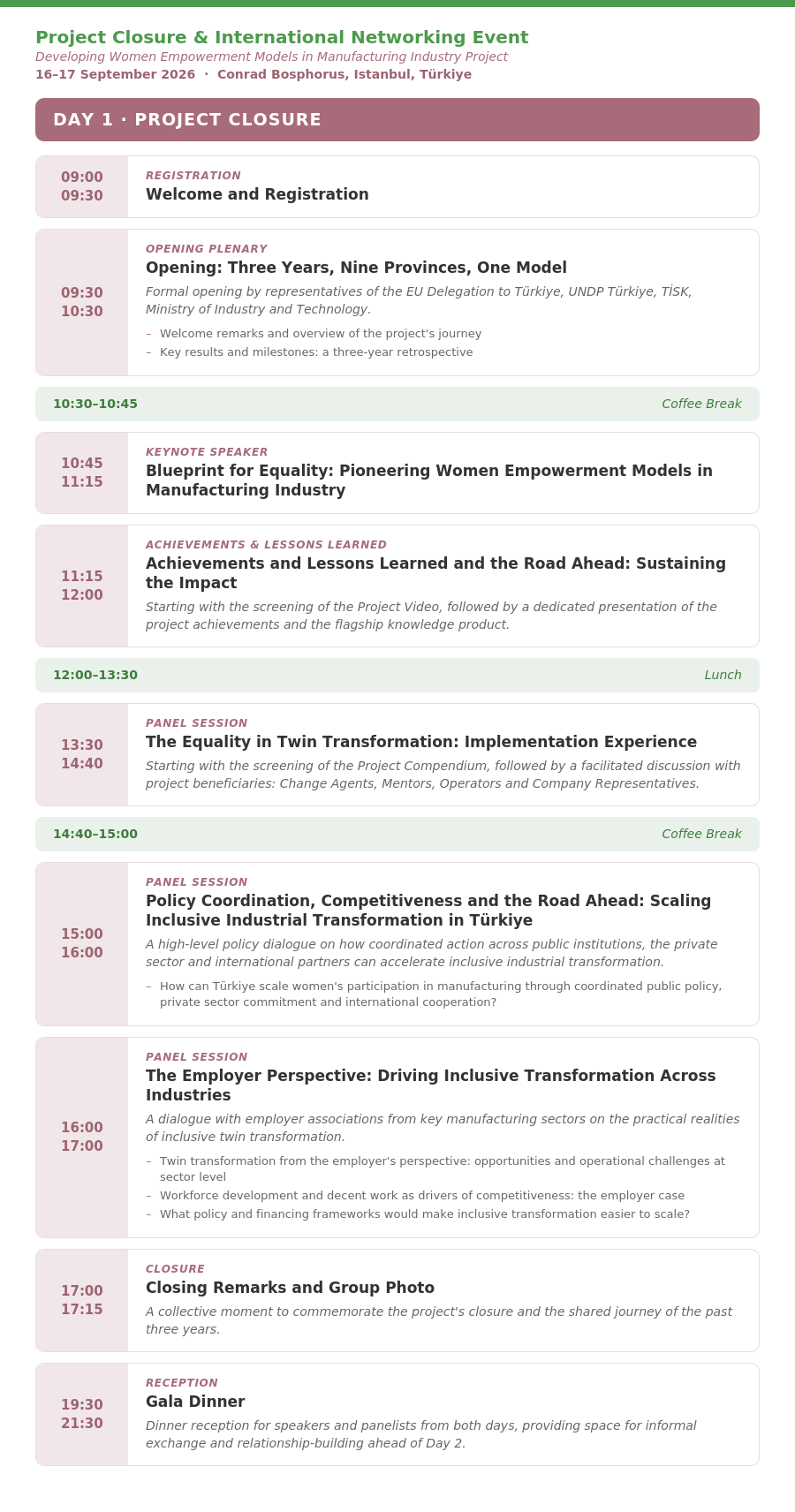
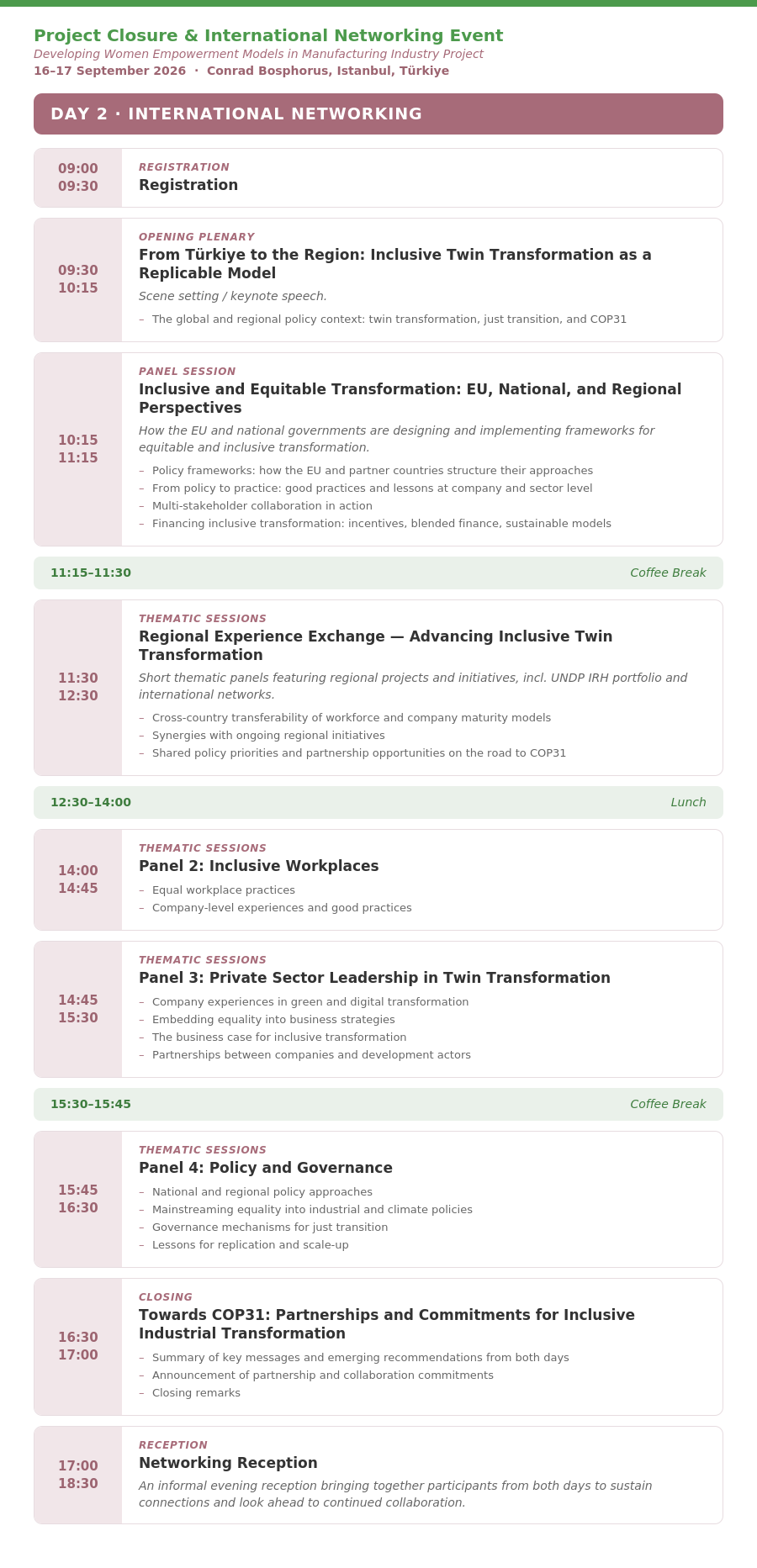
The event spans two days. Day 1 is dedicated to the official project closure: it convenes project partners, beneficiaries and key national stakeholders to reflect on results, share experiences, and formally present the project's knowledge products. Day 2 is oriented toward international networking: it opens the project's model and outcomes to a broader audience of development partners, EU institutions, international organizations, and regional initiatives, and facilitates structured dialogue on replication and collaboration.
7. Expected Outcomes
• Formal closure of the project, with achievements recognized and lessons documented through a post-event closure report.
• Wide dissemination of project knowledge products, including the IDE Model and its tools, to an international audience of policymakers, IFI representatives, and development partners.
• Partnership commitments — letters of intent, expressions of interest, or collaborative research and policy agreements between participating organizations.
• A post-event summary report consolidating key messages and recommendations for submission to the COP31 thematic process.
• Strengthened regional network connecting the WE Project with relevant initiatives in the ECA region, EU yes states, and international organizations.
• Increased international visibility of the project and of Türkiye's experience in inclusive industrial transformation, in the lead-up to COP31.
• Consolidated stakeholder feedback and recommendations to support the operationalization of the Equality in Twin Transformation Model and shape future programming, including a potential second phase of the project.